
Even today, despite significant advancements in scientific research in the 21st century, numerous mysterious events still perplex humanity. What secrets lie behind these inexplicable natural, astronomical, and historical phenomena?Throughout the vast expanse of human history, nature and the world itself have often given rise to numerous perplexing mysteries. These top ten unsolved mysteries of the world may be exaggerated rumors, or some still baffle scientists. These mysteries encompass multiple fields, including nature, astronomy, geography, anthropology, and archaeology, and humanity's exploration and verification of these mysteries will never end.

Secrets of Historical Relics
- The Mystery of the Disappearance of the Khmer Kingdom of Cambodia
The Khmer Kingdom of Cambodia flourished between the 9th and 15th centuries, only to suddenly disappear, the cause of which remains a mystery. One theory suggests a connection to climate change and environmental disasters. Historical records and geological evidence indicate that the climate was relatively humid and stable during the Khmer Kingdom's prosperous period, but later it gradually became drier, with rising temperatures leading to reduced rainfall, soil infertility, and agricultural difficulties, posing significant challenges to the Khmer Kingdom's agriculture and society. Extreme heat could also trigger water depletion, crop yield reduction, and population migration, weakening the economic base and social structure. However, temperature change is not the only cause; political instability, foreign invasion, and social conflicts may also have played important roles. Archaeological discoveries at the Khmer Kingdom ruins, including charred buildings and human remains, have sparked a mystery surrounding a catastrophic fire. The legend of the mysterious "Flame Guardians" adds to the mystique surrounding the kingdom's disappearance.
- The Mystery of the World's Deepest Canyon
In the Yarlung Tsangpo Grand Canyon, British explorer Ward discovered the spectacular Rainbow Falls in the 1920s, and ten years later, American explorer Bailey confirmed its existence. However, for nearly 70 years afterward, countless explorers failed to find it. In 1998, a Chinese scientific expedition found a dry cliff face within the canyon, which could very well be the legendary "Rainbow Falls." In 1950, an 8.5 magnitude earthquake struck Medog, and the "Rainbow Falls" may have disappeared in the earthquake. Perhaps the violent tectonic activity "smoothed out" the waterfall's drop, or perhaps a landslide blocked the upstream water flow, or perhaps previous accounts were inaccurate. The waterfall remains hidden in an unknown corner of the Grand Canyon. The Yarlung Tsangpo Grand Canyon, located in the Tibet Autonomous Region of China, has complex terrain and a variable climate, which is one of the reasons why Rainbow Falls has been rarely found in the past 70 years. Furthermore, the existence of Rainbow Falls may be affected by climate change; global warming may cause changes in the waterfall's water source. Moreover, Rainbow Falls may be a seasonal natural phenomenon, appearing only under specific seasons and weather conditions.
Ancient Curse Mystery
- Ötzi's Curse
In 1991, the German mountaineering enthusiasts, the Simons, discovered Ötzi the Iceman in the Italian Alps. This 5,300-year-old mummy was remarkably well-preserved, with clearly visible skin pores, and a bronze axe and a quiver containing 14 arrows were found beside it. However, since Ötzi's discovery, those involved in the research have suffered a series of misfortunes.
Hahn, the head of the identification team responsible for the Ötzi research, died in a car accident the day after excavating the mummy. Himalayan guide Fritz was buried alive in an avalanche after acting as a guide during the excavation. Journalist Holzer, who provided comprehensive coverage of the Ötzi the Iceman story, died after a failed brain tumor surgery. A month later, the couple who discovered Ötzi died in a fall while hiking together. Dr. Conrad Spindler, who conducted the scans on Ötzi, died in a plane crash. The numerous deaths following contact with Ötzi fueled the growing belief in the "Ötzi curse."
Biologist and archaeologist Tom Roy expressed strong skepticism about the Ötzi curse. He pointed out that most scholars studying Ötzi were over sixty, a period of high susceptibility to illness, making death from disease a significant possibility. Tour guides, hiking couples, and journalists, who work in high-risk professions or enjoy adventurous activities, were far more likely to encounter danger than the average person, thus their successive deaths were plausible. In late 2003, Tom Roy died at home from a blood disorder, temporarily ending the Ötzi curse.
- The Mystery of the Pharaoh's Curse
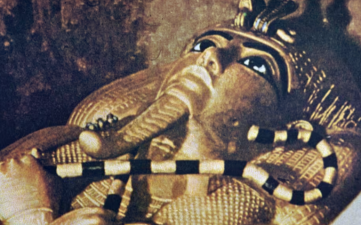
In ancient Egypt, the tomb of Pharaoh Tutankhamun bore the inscription: "Whoever disturbs the peace of the Pharaoh, the wings of death will descend upon him." In November 1922, British archaeologist John Carter, with funding from Lord Carnarvon, discovered Tutankhamun's tomb. None of those involved in the initial excavation took the curse seriously, yet in the decades that followed, the shadow of death frequently fell upon them.
The first to suffer was his patron, Lord Carnarvon. He was stung on the left cheek upon entering the tomb, developing sepsis and ultimately dying in the hospital. After Carnarvon's death, his brother, the nurse who cared for him, the American archaeologist Macy who was brought in to help, Professor Jacibert Reid who unveiled Tutankhamun's shroud, and two of Carter's trusted assistants all died within a short period. Furthermore, Douglas Reed, who had handled Tutankhamun's golden mask, and scholars and experts who participated in the excavation and investigation, all died one after another. Some visitors also suffered; American Gold died suddenly of a high fever the evening after visiting the tomb; British industrialist Wool died on his way home by boat after visiting the tomb; a wealthy South African man drowned after falling into the Nile River while boating on the river after visiting the excavation site. Most perplexingly, in 1929, Carnarvon's wife, Elizabeth, died from the exact same cause as her husband.
Experts and scholars have offered various theories about the causes of these deaths. One theory suggests pathogens; Azadin Taha, a professor of biology at Cairo University, believes it was infection by bacteria in the tomb. Another theory suggests bacteria and fungi; German researchers discovered a deadly fungus in the tomb. A theory of poisons suggests the pharaoh used poison to protect the tomb. A theory of super-energy substances suggests that some scholars believe the pharaoh's burial goods contained radioactive materials or energy unknown to modern humans. Despite various explanations, none have yet been convincing, and it will take time to truly unravel the mystery of the Pharaoh's curse.
The Mystery of Cosmic Signals: The Mysterious "Wow!" Signal
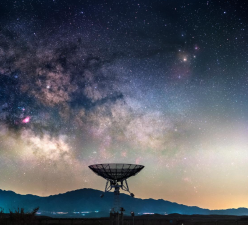
In 1977, the O'Hara Telescope in the United States, while observing extraterrestrial systems, unexpectedly received a mysterious signal, known as the space signal, or "Wow!" signal. This signal was extremely brief, lasting only 72 seconds, but its complexity and peculiarity attracted the great attention of scientists.
The discovery of the "Wow!" signal was quite remarkable. On August 15, 1977, American astronomer Jerry R. Ehman, acting as a volunteer, was examining a long paper tape printed by the O'Hara radio telescope's listening printer when he suddenly discovered an extremely strong signal. Compared to previous signals, this signal was like an electrocardiogram of a person whose heart had been silent for a long time suddenly starting to beat again. The intensity reached 6EQUJ5. An incredibly excited Ehman immediately circled the signal on the paper tape and added his usual interjection, "WOW!", which is the origin of the so-called "Wow!" signal.
The "Wow!" signal possesses very special characteristics. First, its frequency is extremely precise and unlike any signal emitted naturally. Second, the signal strength is exceptionally high, exceeding the combined strength of all radar signals on Earth. Finally, the signal's form is highly regular, resembling binary code, and contains numerous recurring patterns never before observed in nature.
Scientists have conducted various studies and analyses of the "Wow!" signal. They initially attempted spectral analysis and decoding to try and uncover its meaning and information. After years of effort, scientists finally determined the signal's frequency and strength, but failed to find a clear source or meaning. Additionally, some scientists believe the signal might be caused by some kind of interference on Earth, thus exploring its possible origins in depth. Some scientists suggest the signal might be emitted by radar systems, satellite communication systems, or other radio systems on Earth, but these theories have not been confirmed. To better understand the signal's source and meaning, scientists have used various high-tech equipment to conduct extensive searches and observations of other locations in space, attempting to find similar signals and patterns, but without success.
The appearance of the "Wow!" signal has sparked widespread controversy and speculation. Many believe the signal originates from extraterrestrial intelligence, possibly a way for an alien civilization to contact us. This view is supported by numerous science fiction novels and films, but lacks substantial scientific evidence. Others believe the signal may originate from celestial bodies outside Earth, such as planets, stars, or nebulae. Proponents of this view argue that the signal might be generated by natural phenomena of these celestial bodies. Still others believe the signal was man-made, possibly the result of a military or technological project. Supporters of this view believe the signal might be an encrypted message or experimental signal, kept secret to prevent outsiders from knowing. Some also believe the signal might be generated by natural phenomena, such as cosmic rays or solar wind. This view has some support from scientists, but lacks substantial evidence.
In short, the "Wow!" signal discovered in 1977 remains an unsolved mystery. Scientists are still working hard to study the signal, hoping to one day unveil its mystery.